Interesting Resident Advisor article on bootlegged vinyl albums, with a focus on electronic music. It’s kind of a perfect storm – DJs and aficionados are always looking for rare tracks, digital masters are more widely available, the quantities are small enough that it’s rarely worth it for the artist to file lawsuits, and bricks-and-mortar music stores are already struggling, so they have an incentive to look the other way.
[embedded YouTube video; if you can’t see it, click here]
Nice guest post in the Freakonomics blog by gaming maestro David Edery about the positive impact of music-based video games like Guitar Hero and Rock Band on the music industry. He does have something of a vested interest, since he works for Microsoft’s Xbox Live Arcade, but he does provide some compelling bits of data: for example, Guitar Hero: Aerosmith earned the band more money than any of their individual albums. Edery’s posting focuses on major-label artists, but of course, where this really gets interesting is as a path out of obscurity for lesser-known bands (such as Freezepop, as in the video above, and Bang Camaro, both of whom have songs on Rock Band).
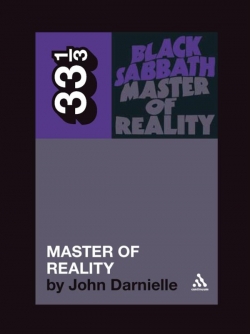
The 33 1/3 book series is pretty awesome, and they are currently soliciting proposals for new books. If you’re not familiar with them, the conceit is that each book is about a single album, but the exact format is somewhat variable. For example, John Darnielle‘s tribute to Black Sabbath’s Master of Reality is a short novel, written from the point of view of an adolescent boy being held in a psychiatric facility. Colin Meloy‘s book about Let It Be by The Replacements is a coming-of-age memoir. And now it could be your turn. Have a beloved album that you can tell an interesting story around? Go here for full details of how to write and submit your proposal. But get going – the deadline is the end of the year. Here’s a list of the books to date.
[embedded YouTube video; if you can’t see it, click here]
I’m not terribly thrilled about the PC response to the Mac ads – don’t ad agencies ever consider that we might choose a computer for reasons other than because we want to belong to a cult of personality? And besides, if I did want to be part of a cult of personality, it wouldn’t be one that included Deepak Chopra – ick. But Girl Talk (Gregg Gillis) does get something exactly right in this ad, when he says, “Software, computers, it’s the most punk-rock thing that’s happened ever. People just come up with ideas – there’s twelve-year-olds who just hear music and then they go out and make something amazing.” You could make a pretty good argument that the DIY ethic of punk rock was a quarter-century ahead of its time – that while punk rock’s inception was in reaction to societal conformity, it’s only now achieving its logical expression, with the democratization of both the means of producing music and of distributing it.
It’s Veteran’s Day, Remembrance Day in Canada. For many years, I’ve re-read “In Flanders Fields” and listened to the Pogues’ version of “The Band Played Waltzing Matilda” on this day. A few years ago, I started listening to the “The Green Fields of France,” by the Dropkick Murphys, as well. Both songs are by Australian folk singer and songwriter, Eric Bogle, and they both commemorate the fallen in World War I, at Gallipoli and in France respectively. They are also both superbly powerful indictments of war.
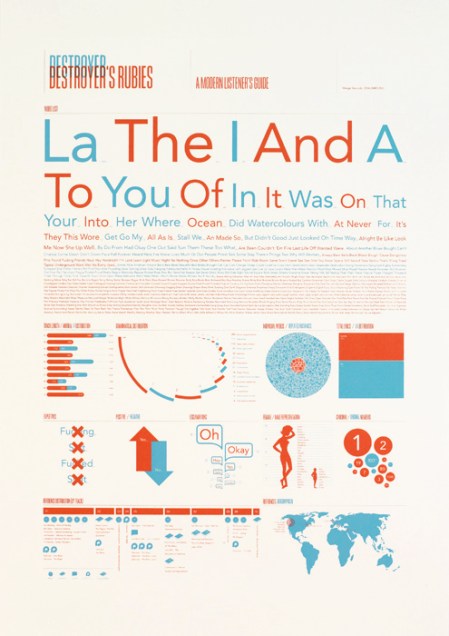
Asked to respond to the word banausic, I chose to take the most grandiose, willfully complex thing I knew and express it as mechanically and cold [sic] as I could manage. ‘Destroyer’s Rubies’ by Destroyer was that thing.
Burrows transcribed the entire album and used the data to produce a limited-edition print, which is now available for preorder. It’s beautiful, if a little pricey to consider using as dorm-room decor. He’s also announced that it’s the first of the ‘Modern Listener’s Guide’ series of indie-rock infographics; I can’t wait to see the rest.
[embedded YouTube video; if you can’t see it, click here]
Regular readers of this blog know that, while it’s mostly about indie pop, there’s also a healthy dose of geekiness, and today we are departing from our usual musical genre to amp up the geek quotient.
I was intrigued to hear that the mystery of the opening chord of “A Hard Day’s Night” (which you can hear in the video, above) was finally solved. For forty years, it’s vexed guitar players because no one could replicate the sound. But a Dalhousie University mathematician, Jason Brown, used a Fourier transform to figure it out. This mathematical technique can be used to decompose the sound into its component frequencies, and Brown showed that there was one frequency that couldn’t be accounted for by George Harrison’s 12-string, Paul McCartney’s bass, or John Lennon’s guitar. This extra note was a clue that the missing element was a piano chord, played by ‘fifth Beatle’ George Martin.
There’s a nice post on Noise Addicts that includes links to a PDF of the paper and to additional information about the chord.
I guess it had to happen. On November 24th, Christie’s is holding an auction of punk-rock memorabilia. It includes everything from a signed Ramones test pressing to a Sex Pistols press kit to a bondage jacket. That kick-ass Sandinista poster, above? Expected to fetch between two and three grand. Says a Christie’s spokesperson:
The generation who can now afford to buy this stuff is interested in different things. They’re not as interested in the Beatles as they are in the Sex Pistols or Nirvana. Ten years ago, punk memorabilia probably wouldn’t be something we’d be auctioning here. But now, people of a certain age have a certain ability to splurge on this material.
The sad part is that, if I had a spare eight hundred dollars lying around, I’d probably happily spring for a copy of Linder Sterling’s Orgasm Addictposter.
With all the talk of the demise of the music industry, it’s easy to forget that this has all happened before. And, equally importantly, all not happened before. Television heralded the demise of the music industry, as did cassette recorders. And while they unquestionably changed the industry, they didn’t kill it. As debcha has noted, for better or for worse, the industry will continue to find ways to change.
Last week, MTV began putting its catalogue of videos online. As the article rightly notes, most of this stuff is on YouTube, so it remains to be seen whether people will actually make use of the site, but I think that ignores two factors, one good and one bad. First the bad: MTV actually contracted, at some point, to use these videos in some context. And, presumably, their lawyers believe they still have the right to use them in this way. They probably do – I don’t know. YouTube leaves the stuff up on a “so long as nobody complains” basis. Now that there’s an “official” and “licensed” Internet presence of this material, I’d expect to see an increase in complaints.
But second, YouTube functionality is great if you either a) know what you’re looking for; or b) don’t really care that much what you see. It’s not well designed for browsing or separating music video from poorly filmed concert footage – you can do it, but it’s easy to get swamped in a deluge of “not really what I wanted”. MTV’s site is better suited to wandering the aisles and stumbling across things you’d never seen or forgotten about. So, whether I want a combination of horror movies and newsreel, or puppets, or bands that it’s hard to imagine being talked about on MTV, I know I’m more likely to discover it here than on YouTube. On the down side, they don’t yet have XTC’s The Ballad of Peter Pumpkinhead, one of the very few videos I can actually remember watching on MTV, but then YouTube only has the UK video, not the one I remember. And the Crash Test Dummies cover just doesn’t fill that void. Sorry, Canada.
But this Web site just serves as a reminder that MTV has seen better days and that changing an industry is sometimes better for the industry than it is for the agent of change.
Like most progressives in the US, I’m rapidly oscillating between giddy optimism and fear. Naturally, I had to find a set of songs that reflects this. For best effect, set your iTunes playlist to ‘shuffle.’
Mayor Greg Nickels thinks that Seattle is not getting the recognition it deserves as a music city, and last night he unveiled the Seattle Music Commission. Modeled after similar organizations in Austin and Chicago, it has a twelve-year mandate to work to improve Seattle as a city for musicians, for live music, and for music businesses. Nickels has had a somewhat rocky relationship with Seattle music venues, having spearheaded some fairly draconian city bylaws, including asking for the authority to shutter clubs that didn’t comply (the City Council balked, and ultimately Nickels decided to veto the scaled-back versions). However, he’s recently proposed rolling back the admission tax at venues and providing city assistance to help new venues start up. Last night also marked the release of a new economic impact study; highlights include the 20 000 or so music-related jobs in Seattle, the 1.2 billion dollars of revenue, and the fact that about 40% of this revenue comes from sales outside King County, bringing cash into the area. Nice to see the Mayor’s Office step up to the plate to help Seattle get even better as a music town.
I’m delighted to report that noted Canadian auteur Bruce McDonald (best known for his films Highway 61, Dance Me Outside, and for his onstage comment on winning an award for the movie Roadkill, which came with a large cash prize: “This will buy me a big chunk of hash.”) is creating not just one, but three sequels to the 1996 cult classic, Hard Core Logo. The original is a mockumentary about punk band Hard Core Logo’s last cross-Canada tour, and is often compared to This is Spinal Tap. But it’s a lot darker, to say the least. That’s part of the reason why the announcement of sequels is so surprising – the end of Hard Core Logo is, well, terminally depressing. The movie also wasn’t what you’d call a commercial hit, although it’s developed a steady fanbase on DVD. On the other hand, both the leads are now draws in their own right: Hugh Dillon has gone from his punk roots as lead singer for Toronto’s Headstones to a well-respected actor on Canadian TV, and Callum Keith Rennie most recently played one of the Cylons on Battlestar Galactica. And playwright Daniel MacIvor is signed on to write the second sequel. More details of the sequels can be found in this Calgary Herald article.
I’m a total sucker formixCDs, and you’ll never catch me sitting around bemoaning the death of the Album. So a website like My Secret Playlist tickles me. They ask artists what songs they are currently listening to, and then post an annotated playlist (you can stream all the songs). Recent contributors have included everyone from Chris Walla of Death Cab for Cutie to Donna Summer to a bunch of people I’ve never heard of and am really looking forward to checking out. It’s a great place to hear both the old and the new music that is inspiring artists today.
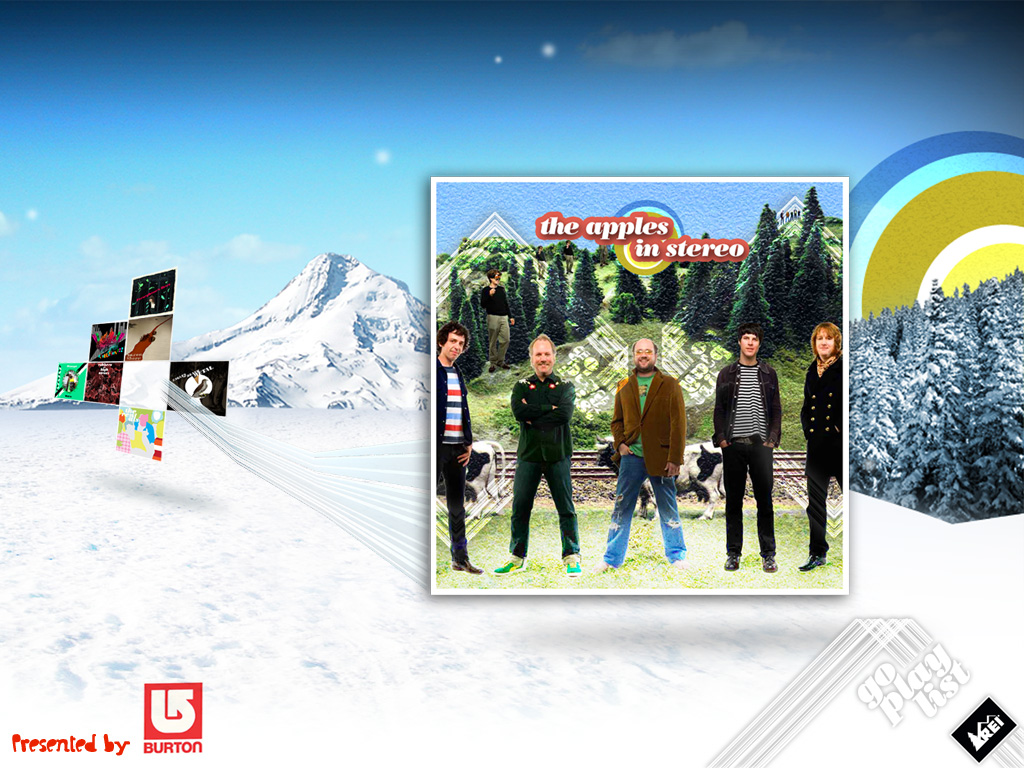
Well, the days are getting shorter and the weather is turning colder. But for those of us who look forward to winter (and maybe to encourage those who don’t), outdoor outfitters REI got a bunch of gear companies to sponsor songs about the snowy season, from bands including Apples in Stereo(above), Eagles of Death Metal, and Seattle power-pop band Quadrillion. The best part is that REI is making the songs available as unrestricted audiofiles for download. The MP3s are up already, and it looks like videos for most of the songs will be up later this winter.
This is clearly ‘future of music’ week in the zeitgeist. I wrote a bit about it based on a Boston Herald article about how Pretty & Nice met Built to Spill‘s bassist managing a Jiffy Lube in Boise, and I just stumbled on a Village Voice music blog post on much the same theme, this one focusing on licensing versus developing a fanbase:
Which is to say the model now is to completely bypass the consumer—whose thumbs-up/thumbs-down was once the obvious, inarguable standard of success—in favor of the television drama, the movie soundtrack, and the TV commercial….What is curious about this model is that it essentially imagines an industry future without fans. People will consume music the way they consume actors and actresses: as part of a much bigger whole, to be judged as such. Beatles-type fame is a casualty, although I’m sure these dudes have no trouble getting laid; so are about a million tropes, some good, some bad, traditionally designed to appeal to ‘music fans,’ a demographic that may well not exist in ten years.
So, to recapitulate: mobs of screaming fans – out; a modest revenue stream through licensing, direct CD sales, merch, gigs, podcasts, etc, etc, and yet more etc – in. Hmmm. I’ll have to give some more thought to what I think this trade means for both fans and artists. If you have thoughts, feel free to share them in the comments.
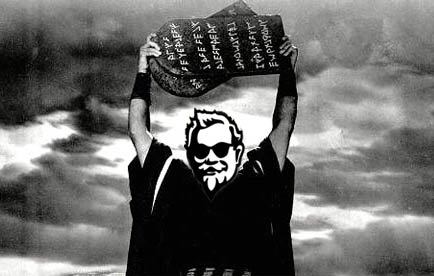
My Old Kentucky Blog just wrapped up a series entitled “The Ten Commandments Guidelines of Concert Behavior.” Reading it makes me realize that I’ve been exceptionally fortunate at concerts, as when I wrote my own version, I didn’t feel the need to include “Thou shalt not puke” or “Thou shalt not fart.” I also feel like I’m pretty pedantic and geeky, so I am humbled by the fact that the author managed to work in both Charles’ Law and Herodotus. The posts contain excellent concert etiquette advice, and are also highly entertaining (if occasionally horrific) reads. The Tenth Commandment Guideline is here, and there are links to the other nine at the bottom of the post.
Since zed equals zee’s inception, about a year ago, I’ve gotten a decent number of CDs from promoters. Some of them I want to keep, but most of them aren’t worth the storage space, always a premium in my urban environment. I know that someone likes these bands, and I’d really like it if the CDs got listened to. And the easiest way to find those people is through the miracle of capitalism – I want to take the discs down to my local secondhand CD store, or put them on eBay. But many of them are stamped, “Promotional use only – not for resale.” So I was stuck – I didn’t want to have to store them, I certainly didn’t want to landfill them, I don’t personally know people to give them to, and it looked like I couldn’t sell them.
Fortunately, that last turns out not to be (legally) the case. The Legality, an online law review based out of the University of Oregon School of Law, has a useful and accessible article on the “First Sale Doctrine” and CDs. Basically, once you’ve bought the CD, you can do what you want with it – you can sell it, you can regift it to your Uncle Alfred, you can microwave it, whatever. This principle was recently affirmed for promo CDs, warning sticker or no. Universal Music filed suit against an enterprising individual who was scouting secondhand CD stores for rare promos and reselling them to collectors. The California courts ruled that, once the record companies hand them out, that’s the equivalent to selling them – they lose control of what happens.
Of course, with everything going on in the music industry today, it’s hard to imagine that bringing suit over the disposition of the physical objects is really worth the effort.
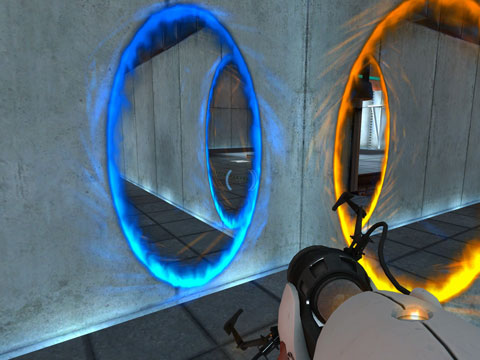
I got a press release today, heralding the theme song for the upcoming Electronic Arts videogame “Mirror’s Edge.” It’s sung by Lisa Miskovsky, and Nettwerk is releasing an EP of remixes, including big names like Paul van Dyk. The song is called “Still Alive.” Wait a minute, I think, isn’t that the name of the song Jonathan Coulton did for Portal? Yes. Are the games related? No. (I suspect that asking the question reveals the depth of my gaming ignorance.) I mean, seriously – it’s been barely a year since Portal came out – didn’t anyone at EA realize that the world might not want two videogame themes with the same title?
I’m sorry to have to relate that the Miskovsky song, at least the baseline version, is a little generic-sounding; I streamed it while working at my desk and realized I wasn’t even listening to it. On the other hand the Coulton version, like pretty much everything he does, is anything but generic. If you’re spoilerphobic and haven’t yet played the game, you might want to pass on listening to the song; if you’ve completed the game or don’t care about spoilers, you can get full details of the song process and lyrics from JoCo’s blog. Also, if you have issues with vocoders and/or sopranos (it’s sung by Ellen McLain, who did the character’s voice in the game), you might prefer a version that Coulton sings himself.
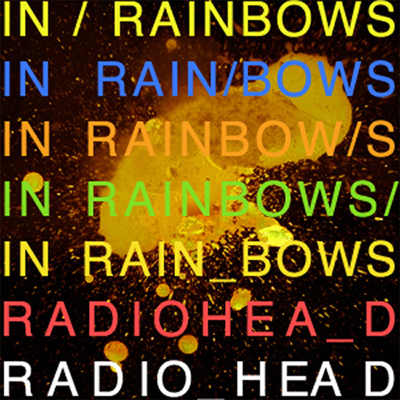
According to today’s NME, Radiohead report that the three months of pay-what-you-will In Rainbows downloads brought in as much cash as 2003’s Hail to the Thief, although they aren’t reporting the average price. On top of that, they sold around 100 000 of the box sets, which included a couple of extra tracks (as well as the pretty packaging, of course). Looks like a pretty solid financial outcome to a good experiment.








 zed equals zee