[embedded YouTube video; if you can’t see it, click here]
Matador Records remastered the first three Mission of Burma releases: Signals, Calls and Marches; Vs.; and The Horrible Truth About Burma, to create the ‘definitive’ versions that came out on March 18, 2008. They documented the remastering process, and put four videos up on YouTube. Music production geeks and MoB fans rejoice!
eMusic is soliciting questions for Dan Bejar (aka Destroyer), whose album Trouble in Dreams came out this month and who is currently on tour. Send your questions to asktheartist@emusic.com before this Tuesday, April 1st, and keep an eye out for the interview, scheduled to be on the eMusic homepage during the week of April 21st. Bejar’s lyrics are notoriously obscure – now’s your chance for some enlightenment. What I really want to ask about the New Pornographers’ concert in Boston last fall: “Dude, was that really an orange in your hand when you wandered onstage to sing?”
As if Rachael Ray liking Holy Fuck wasn’t bad enough, Entertainment Weekly decided to take a kick at the indie-rock can with their special supplement on The Indie Rock 25. The format – exactly one release from each year since 1984 – is pretty much tailor-made to invite disputatious responses. It’s worth checking out, if only to contrast the picture of REM in 1986 (the picture in the dead-tree version is dorkier still) to their rock’s-elder-statesmen cover photo on April’s Spin.
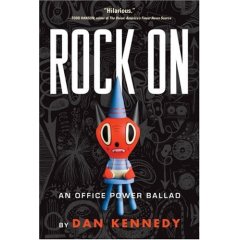
Dan Kennedy is clearly a man who knows how to make the best of a bad situation. He realizes a lifelong dream of working in the music business, only to discover that he’s just gotten himself a deckchair on the Titanic. The year is 2002, the company is Warner, and the record industry is imploding. Warner itself is about to be bought by ‘the billionaire grandson of a man who made the family a fortune in booze and chemical dealings,’ resulting in hundreds of layoffs, including Kennedy’s. Fortunately for us, he turned his experiences into a acidly funny memoir, Rock On: An Office Power Ballad. This book certainly made me laugh, and it also made want to loudly cheer the ongoing demise of the traditional record industry. However, my favourite part of the book was a lengthy, loving account of an Iggy Pop concert, possibly because Kennedy was writing about something he loved, not about something he had to be self-protectively cynical about:
…Iggy is everywhere at once. He flies like a computer-animated god-beast deity in an unhinged and hijacked Lucas film. You suddenly realize every punk band you thought was blowing your mind back when you were sixteen was simply a cute little messenger delivering a wadded note to you from this man, wherever he might have been that night.
You can see a promo video for the book here, and Michael Azerrad wrote a review for the New York Times, here. You can also download audio of Kennedy telling a story from the book at a Moth gig in Seattle.
This looks awesome. Altamont Now is having its world premiere tomorrow, March 22nd, at the Boston Underground Film Festival. From the director: ‘it’s the story of a mysteriously square journalist who happens upon a cult of rock and roll revolutionaries living inside an abandoned nuclear missile silo with little idea of what they are “revolutionizing” against.’ Shot inside an actual underground silo, it’s an absurdist, satirical look at how youth rebellion borrows from its past.
I’m a little late blogging this, but Seth Godin, a marketing guy, posted a transcript of a talk that he gave to a roomful of music company executives. This is the stuff I wave my hands about and try to explain to everyone I know, when I talk about why I have a music blog and how the music industry is changing. Godin starts by summarizing the factors that made the traditional music industry so sweet (the ubiquity of Top 40 songs, music as a physical artifact that was coveted and which wore out, free promotion via radio and TV, an oligopoly of record companies, and so on) and then makes the case that they are all gone:
Music is not in trouble. I believe more people are listening to more music now than any time in the history of the world. Probably five times more than twenty years ago…that much! But, the music business is in trouble. And the reason the music business is in trouble is because remember all those pieces of good news?…every single one of them is not true anymore….
Having explained how all these factors have disappeared, he goes on to discuss how record companies now have to change the way they do business:
There is a lot of music I like. There is not so much music I love. They didn’t call the show, “I Like Lucy”, they called it “I Love Lucy”. And the reason is you only talk about stuff you love, you only spread stuff you love. You find a band you really love, you’re forcing the CD on other people, “you gotta hear this!”. We gotta stop making music people like. There is an infinite amount of music people like. No one will ever go out of the way to hear, to pay for, music they like.
The final point that Godin makes is that music creates tribes of people, who want to interact with each other and the musicians, who want to go to concerts – nobody who really loves a band wants to be a passive consumer. Godin persuasively argues that the music industry has to start thinking about ‘tribal management.’
I’m not convinced that record label industry execs are the people who are going to make the transition (Nettwerk aside) but hey, at least they invited the clue train to visit.
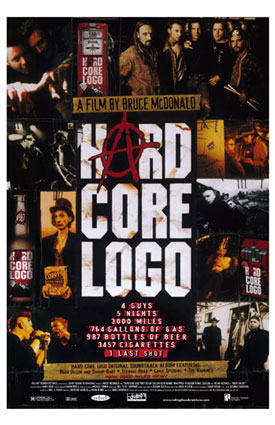
What This is Spinal Tap is to heavy metal, Hard Core Logo is to punk – both of them are mockumentaries following a band on tour. As befits its different genre, however, Hard Core Logo foregoes the silly jokes of Spinal Tap and instead walks an edgy line between humour and bitterness. Based on the book by Michael Turner, and brought to the screen by Bruce McDonald, the movie is widely seen as an allegory of the death of punk (although that makes it sound very boring, while it is in fact funny and sad, and has great music). The cast is stellar, with Hugh Dillon (the lead singer of The Headstones) and Callum Keith Rennie (now probably best known as a Cylon) playing the leads, and guest appearances by Vancouver punk legends DOA and by Joey Ramone. This is just a terrific movie for anyone interested in music, bands or punk.
Stars, who sing perfect Smiths/Belle and Sebastian-style pop songs, performed a live set on NPR‘s Studio 360. The show aired yesterday, and the segment is available for streaming or download. They also did a live bonus version of “Personal”, which is archived below.
I’ll be guest DJing on WMBR tomorrow, Thursday, March 6th, from 8:30 am to 9:30 am EST, sitting in on their weekday morning show, Breakfast of Champions. My playlist is focused on Canadian indie music, probably including songs from the new Destroyer and Ladyhawk albums, which haven’t yet been officially released (man, I’m enjoying having access to WMBR’s library!).
Three ways to listen:
Over the airwaves: If you are in the Boston area, tune into 88.1 on your FM dial.
Live streaming: Go to WMBR and click on one of the links in the top right corner to listen live.
Archives: If 8:30 am Eastern doesn’t work for you, but you’d still like to listen, the show will be archived for two weeks, starting pretty much immediately after it airs. Click here and select March 6, 2008.
Stay tuned for a follow-up post, with the complete playlist.
So obey my fortune cookie and turn way to the left of your dial as you head in to work tomorrow morning!
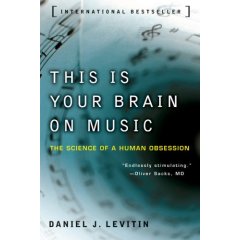
This is Your Brain on Music: The Science of a Human Obsession
Daniel J. Levitin
When I was in graduate school, I mentioned within earshot of a professor that I probably know more about alternative and independent music from 1980 onwards than I know about anything else. The professor insisted that I must know more about my doctoral thesis, but I couldn’t agree – when I think about the thousands of songs I can recognize within a few bars or can sing or hum along to, to say nothing of the masses of ancillary information like band names, albums, song titles and who dated whom, the sheer number of terabytes in my head dedicated to music is staggering. But the really astonishing part is that I’m not unusual. Everyone is great at remembering music. This is the book that explains why.
Written by a platinum-selling music producer who went to graduate school to study cognitive neuropsychology, This is Your Brain on Music addresses the cognitive underpinnings of the remarkable human facility with music. Daniel J. Levitin starts with a brief, lucid introduction to the fundamentals of music theory, and then goes on to discuss how we discern rhythm and harmony, how the brain processes music, and how we remember songs, ending with a discussion of the evolution of ‘the music instinct.’ Levitin shows how these processes are complex and highly distributed, involving regions of the brain ranging from the most primitive (the cerebellum) to the prefrontal cortex, the seat of higher reasoning. Throughout the book, Levitin is clear but doesn’t oversimplify, and he alerts you to the many, many open questions that remain in the field. This is a great book for anyone who’s given any thought to how we think about music.
WMBR, MIT’s community radio station, has one of the coolest member premiums ever – you can come in and DJ part of your favourite radio show. I made a donation to them in their fall fundraising drive, and I’ll be heading in to the studio to be a guest DJ on their morning show, Breakfast of Champions, on Thursday, March 6th, 2008, from 8:30 to 9:30 am EST. Keith, the Thursday BoC host, was kind enough to orient me to the station and let me spend a couple of hours perusing CDs in the stacks (pant, pant) yesterday afternoon, in preparation for my on-air turn.
WMBR homepage (link to streaming audio at upper right of page)
NPR‘s Weekend America invited The Mountain Goats to write and perform a song for Super Tuesday. In true John Darnielle style, it’s a bitterly humorous meditation on politicians as vampires, with a dash of Revelations thrown in. As he says, “Things tend to be more interesting if you take them to extremes….You could be a really good political satirist…[but] I write little emotional psychodramas… I will vote for the person who comes closest to what I think is right, but I don’t like and trust any of them.”
However, in my (admittedly feeble) defense, I’d like to point out that Cambridge, MA, probably has the world’s highest concentration of literate, geeky bands with overeducated lead singers. So instead of talking about bands whose lyrics are in the ‘yeah yeah yeah baby’ school, I get to enthuse about bands like The Franklin Kite, whose lyrics include words like ‘disambiguate,’ ‘conducive,’ and ‘malignant.’ Lead singer Ryan Hickox just got his PhD in astrophysics from MIT (and to celebrate his successful thesis defence, they held a concert). He’s still local though, having joined the Harvard-Smithsonian Center for Astrophysics as a postdoc. If you are in the neighbourhood, go check them out at Tommy Doyle’s in Harvard Square on Friday, February 1st, 2008 (I think it’s some kind of Harvard-oriented concert, but don’t let that put you off).
I have built my life around loving music, and I surround myself with it. I’m always racing to catch up on my new favorite song. But I never stop playing my mixes. Every fan makes them. The times you lived through, the people you shared those times with—nothing brings it all to life like an old mix tape. It does a better job of storing up memories than actual brain tissue can do. Every mix tape tells a story. Put them together, and they add up to the story of a life.
While Sheffield does reach back to his childhood, most of the book centres around his relationship with his wife Renée, her untimely death, and the reality of living as a young widower. Sheffield’s personal narrative is poignant and well-told, and he paints a touching portrait of his deceased wife. I occasionally found the prose to be (in the words of Julien Temple and David Bowie) a little clever-clever, but it was nevertheless an enjoyable and touching read.
Update[January 27, 2008]: By strange coincidence, Rob Sheffield is about to visit the Boston area. He’ll be reading from this book at Brookline Booksmith on Wednesday, January 30th, 2008.
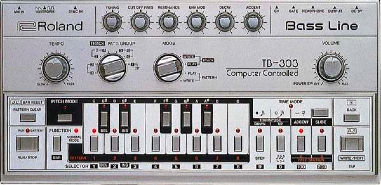
Specifically, on the rise of sequencing and sampling in the early 80s, the democratization of music production that was enabled by the use of inexpensive equipment like the TB-303 and TR-808 and the ability to ‘test-drive’ music on the dance floor before committing it to vinyl, and the resultant development of the Chicago House sound. Hans T. Zeiner-Henrikson, a PhD candidate in the Department of Musicology at the University of Oslo, presented a paper on this work at a conference in Manchester. A copy of the paper, complete with QuickTime beat and music samples, is archived here.
Just released: The new Magnetic Fields album, Distortion, which Stephin Merritt describes as inspired by Jesus and Mary Chain‘s Psychocandy, ‘Just getting to a sound that’s raw and dirty and not inaudible takes a lot of work.’ Their two nights in Boston are sold out, unfortunately, at least at the moment (thank you, TicketBastard) but you might have better luck elsewhere.
Also just out, British Sea Power‘s third album, Do You Like Rock Music? Hell yeah, especially if it’s the new BSP. Unfortunately, looks like they don’t have any East Coast tour dates yet, but I’m optimistic.











 zed equals zee