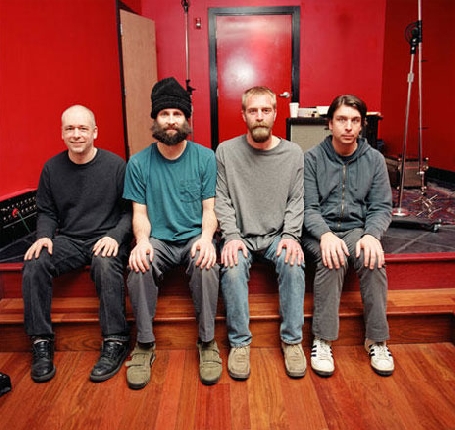
Legendary PNW rockers Built to Spill (pictured) are playing the Capitol Hill Block Party in Seattle on July 24th and they’ve decided to let their fans vote on the setlist.The Stranger‘s art and music blog, Line Out, has a poll where you can select your first choice of song. I hope that this will go a long way towards shutting down people who yell out requests.
Jelli.net crowdsources radio. Yes, real radio. This Sunday, June 28th, they’ll have the first of their regular slots on San Francisco’s Live 105. For two hours, starting at 10 pm PST, it’ll be an experiment in the real-time crowdsourcing of radio. You can go to the website and vote on songs to be played, and you can even band together with other listeners to pull songs off the air. It looks like the station streams online too, so you don’t even have to be in the Bay Area to check it out. (via Hypebot)
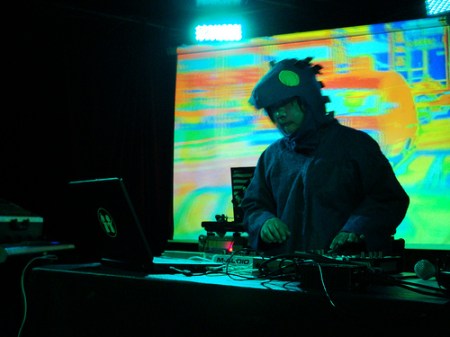
Ever wondered what DJs are doing at their laptops? (protip: don’t ask them the question implied above). Mukilteo, WA’s Rane, who makes the audio interface hardware for the Serato Scratch Live DJ software, is hosting a demo this Friday, June 26th at the War Room in Seattle. There’ll be music and giveaways, and you can finally learn what’s happening on the other side of the screen.
The City Sonic video project is a series of short films that focus on the relationship between a band and a venue. They premiered a half-dozen or so of the films at NXNE last week, and there’s several up on YouTube. One is an interview with Barenaked Ladies drummer Tyler Stewart about the now-defunct Ultrasound on Queen Street W and their residency there.* And z=z fave director Bruce McDonald did one on punk band Cancer Bats at the Adrift Clubhouse. Check their YouTube channel for more videos.
If you happen to be an aspiring filmmaker (or know one), I would love, love, love to see something like this for all the great bands and venues in Boston or Seattle.
*Outing myself as a total dork: When I was a young, geeky, music-loving engineering student (as opposed an old, geeky, music-loving prof), I saw BNL many times at the Ultrasound, frequently bringing my calculus problem sets with me to work on before or between sets. Incidentally, if you think of them as just a novelty band, check out this early and emotionally powerful track.
Daly City’s finest dubstep/8-bit/IDM/glitch artist, David Y. Wang (better known as Mochipet) is back with a new album, Master P on Atari. While it certainly seems like his music should be a bit of a hodgepodge, it sounds great – glitchy and dirty and bleep-y, but with a driving tempo that keeps more than just your head moving. Check him out live tonight at the Broken Disco 2.0 show at Chop Suey.
Part 2 of this week’s music and tech roundup (part 1 is here).
The 10 Commandments of Music 2.0… Hypebot’s concise list of how to engage your followers as an artist. Our fave is #3: “Thou Shalt Giveaway Free Music – Like Jesus and the loaf of bread, give your flock a gift that multiplies as they pass it around.”
…which Trent Reznor is no longer following. The pioneer of social media in music bails, citing the preponderance of jerks and trolls and haters on the Internet. Ironically, this might be a case where being a ‘legacy’ musician (ie pre-dating social media) may be a detriment, not an asset; Reznor’s take on the situation is that some of his fans are upset that the real, Twittering Reznor doesn’t match their long-held image of him.
Why people buy music. A survey of a thousand or so customers at independent music stores revealed a couple of interesting things: one, friends were the biggest influencers of music purchase. The second was that 65% of music store shoppers spent less than 10% of their music spending on digital purchases, which strongly suggests that they are a distinctive subset of the music-buying public (via @pampelmoose).
Virgin Media and Universal team up to offer unlimited downloads for a flat rate. Gizmodo reports that the record label and cable company are set to offer a new subscription service that will let you either stream or download (as DRM-free MP3s) as much music as you want for £10-15. It seems pretty steep for music from a single label, but it’s an interesting experiment (thanks, @mchangolin!)
Lots of stuff happening in the music and tech world this week.
Custom Facebook URLs for smaller fan pages coming soon. Facebook did a terrible job of communicating that only artists and other brands with more than 1000 fans could register custom URLs during the big land grab last week. But they did announce that they’ll open up registration to smaller bands on June 28th. Mark your calendar! [via Hypebot]
eMusic CEO on the Sony deal. There was a considerable outcry when eMusic raised its rates a few weeks ago, not helped by their terrible corporate communication (sensing a theme here…). In this Q&A with eMusic CEO Danny Stein, he reiterates that the indie labels they work with were agitating for higher fees, and the addition of Sony was the ‘catalyzing event’ they were looking for. He also addresses discontented indie music fans and talks about their Six Degrees feature. [via Epicenter]
New model for musicians? Amanda Palmer held an online auction of random stuff from her apartment yesterday, including a (used, albeit not recently, one presumes) glass dildo, raising somewhere north of $4000. To be perfectly honest, I think you can only pull this one off if you are Amanda Fucking Palmer.
*While writing this post, I got a text from a friend of mine that the band in the bar on 6th Street that she was in was really great. So I abandoned it to go listen to some live music. Stay tuned for part 2 of this roundup tomorrow.
…to pocket the royalties. The BBC reports that a group of people, including a number of DJs, are accused of buying three-quarters of a million dollars worth of music they themselves posted to Amazon and iTunes, earning themselves royalties of more than three hundred thousand dollars.
You have to admire their creativity, even if the execution is somewhat lacking. As David St. Hubbins says, “It’s such a fine line between stupid and clever.”
Got a fave meal from SXSW? A favourite bar? Know a divey little place with the best Mexican in the city? I’m heading to Austin for a few days, and I’m looking for things to do, places to eat and drink, and live music venues where I stand a good chance of hearing something cool. I know that many readers of this blog are musicians or who’ve otherwise had reason to hang out in Austin – what was memorable? Where’s the first place you’re going to go when you arrive next March? Please share your suggestions in the comments.
(If you’re interested in where I end up going, you can follow me on Twitter.)
EDIT: Thanks for all the great suggestions, everyone! Unfortunately, I didn’t end up with a lot of free time, but I did end up seeing LOTS of motorcycles and eating BBQ at Stubb’s and at Iron Works.
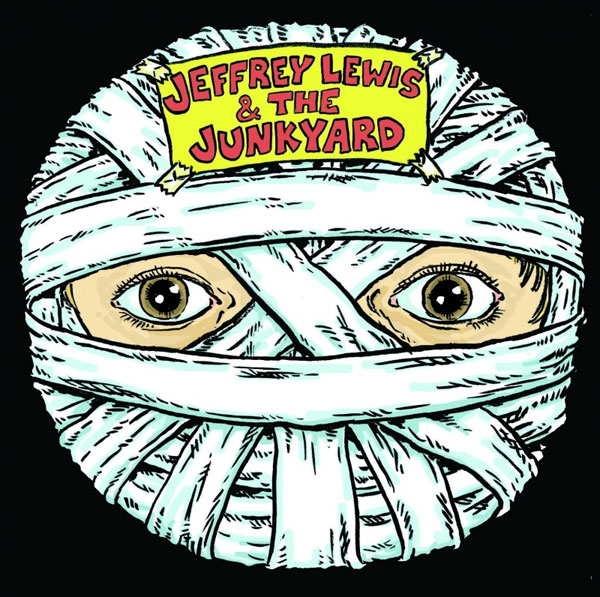
Musician and illustrator Jeffrey Lewis, who did the great cartoon, “My 2008 in a Nutshell,” has a new video project, Jeffrey Lewis and the News (if you are under 25, the allusion is to this). The first segment of each video is a short, illustrated recap of the news, and the second is a musical performance with Jeffrey Lewis and musical guests. Of the three episodes up so far, my favourite is the second episode, which features what I can only describe as an acoustic mashup of “Louie, Louie” and Pavement’s “Cut Your Hair.” You can check out all the videos so far, and subscribe to them as a podcast, here.
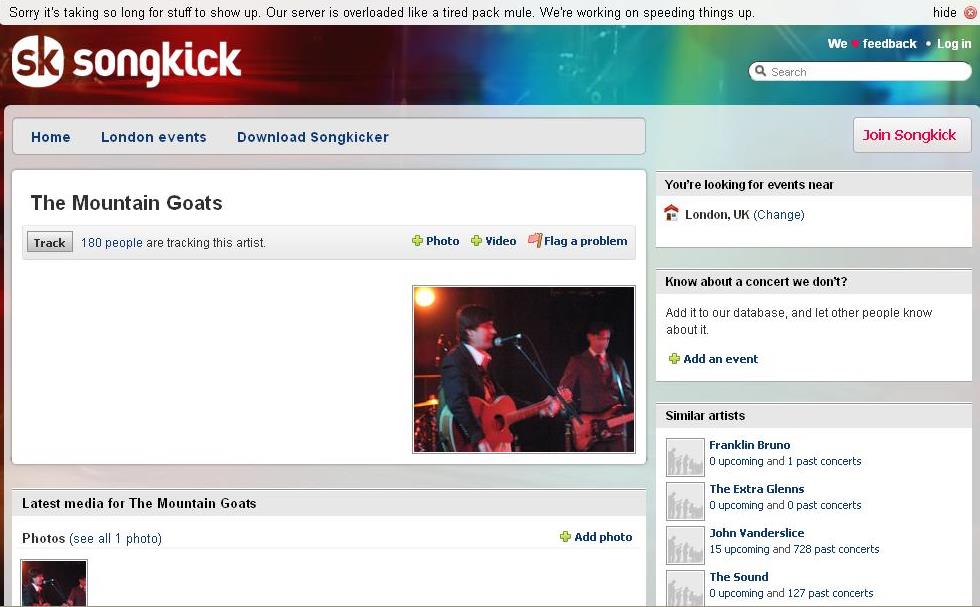
Songkick brings together two bright spots in the world of music: fan communities, and live music. On the one hand, it’s an evolving database of live shows, complete with dates, opening bands, and fan-uploaded media like photos, posters and (of course) ticket stubs. On the other hand, you can be a Twitter-like follower of not just artists, but also venues and other users, whether they are your friends from down the block or a music editor on the other side of the world.
While there is lots of concert information on the web, it’s primarily sequestered on either artist sites or on music blogs. Songkick scrapes the web to find information related to live shows, but it seems like the predominant source of content is from users. Like all crowdsourced/social media sites, it’ll continue to get better as more people use it. At the moment the database is still a bit rocky. A search of ‘The Mountain Goats‘ returns two entries: one with an uploaded photo but no concerts, and the other with a 477-show ‘gigography’ but no photos. And the latter doesn’t include the Somerville, MA show on March 25th of this year, which Brad of the eponymous Almanac did a fantastic job of describing, recording, and sharing.
I’d love to see a local music scene make the most of Songkick by ensuring that local indie shows make it onto the site (hint, Boston Band Crush, ahem): it seems that the ability to follow and connect with other users would be particularly compelling if you could meet them at concerts around town.
Jason Feinberg, writing for PBS’s MediaShift website, just posted a good summary of the SanFran MusicTech Summit. He hit the nail on the head as to what made it an engaging conference:
The tired meme that holds the industry screwed up by not embracing Napster in 1999 may be true, but after 10 years the discussion needs to move forward….The panel discussions were focused on specific actions we can take to boost revenue, enhance fan engagement, foster social network interaction, and evaluate digital delivery options, as well as talk of how artists can take active roles in their (digital) careers. … I found the focus at each panel to be on working solutions, data that has shown results, and fostering discussions between opposing viewpoints.
Read more of what he has to say about some specific panel discussions here.
Further to our discussion of streaming vs downloading a couple of weeks ago, here’s a short article from Digital Renaissance, “The Future of Private Copying,” that came out about a year ago, in which the author gives projections for the average size of a hard drive. I’ve taken the data from that article* and plotted it; note that it’s a straight line on a semi-logarithmic scale (that is, the size of hard drives is increasing exponentially, Kryder’s Law). Also note that the average song is about 5 MB (0.005 GB) as an MP3 and about 25 MB in a lossless format. As the author writes, “How will this development affect private copying? When music fans can say: “I have all the music from 1950-2010, do you want to copy?” What kind of business models will be viable in such a reality?”
I’d love to see something similar forecasting the use of the wireless spectrum, which I know is a bit up in the air right now because of the delays in switching from analog to digital television broadcasts. If anyone can point me to a good reference, I’d really appreciate it.
*I haven’t sourced the data, but a quick troll through Dell and Apple’s site suggests that the numbers are in the right ballpark, and the shape of the curve is documented. It is an extrapolation though, which is always a bit dangerous.
EDIT: In the comments, Mark Chang writes:
The spectrum is there. It all depends on regulation and deployment costs in a country like the US. For instance, in Korea, SK Telecom has had MelOn, a streaming music service, since 2004. AFAIK, you can subscribe and stream all you want to your phone….
I would say that storage is free, bandwidth is where you pay. And you end up paying the provider of said bandwidth plus the fees to cover the licensing of the material. Since in the US, the copyright complexities and general craziness of the recording industry, and the propriety-stuff-first thinking of the wireless carriers, it becomes orders of magnitude harder. But only from a business perspective. This is all easy from a technology standpoint, and really, advantageous from a cost perspective.
Stuart Murdoch (of Belle and Sebastian) has launched his latest project, girl-group inspired God Help the Girl. He’s blogging about it for the Grauniad, and the first post came out a few days ago:
I was in a pop band, but there was no glamour. I had given it my best shot, but I had experienced none of the highs that I had perhaps expected a working pop singer to experience. I’m not talking about snorting coke and laydeez. I’m talking about something else … it’s hard to say. …Belle and Sebastian have never had a hit record. Not really. Not a proper hit record. Therefore, Belle and Sebastian have never recorded music with the feeling that anyone was actually waiting to hear it! We have never recorded for an audience. Therefore, we have always recorded music … in a vacuum!
They’ve developed a beautiful website to showcase the project, including Murdoch’s diary, a place to ask questions, and making-of videos. And the music project itself is being presented as a subscription, with digital music, CDs, 7-inches, videos and more:
This subscription package will gently unwind over the months allowing you to soak up the living, breathing world of God Help The Girl. A musical project with a beautifully and diligently crafted narrative that deserves to be listened to over time, for each place, character and voice to be properly digested before moving on to the next.
You can learn more about the project here, or subscribe for yourself here. While God Help the Girl aren’t the first people to do a subscription model of this sort, this is a notably well-executed version.
Technology artist and writer Victor Keegan has a column in The Guardian, in which he makes some interesting points about 2008 music sales:
In the last quarter of 2008, album sales in the UK were – wait for it – 0.9% up on the previous year, when the economy contracted by 1.5%. And UK royalties for songwriters rose 8% in 2008. Recession? What recession? Overall album sales, which some had predicted would collapse by more than 10% in 2008, fell by only 3.25%, while digital albums rose by 65%. And the singles market? Why, 2008 was the biggest year on record in terms of units sold across all formats…Indeed, if there had been no publicity about illegal downloads then, on the published evidence, the music industry is one that has been doing remarkably well during the recession.
He also touches on a number of other points, such as the industry’s efforts to extend copyright terms and that innovation in music marketing and sales seems to be almost entirely from outside the music industry, namechecking Spotify and Nokia. Read the full article here.
Just a reminder that Live Nation is waiving the service fee on lawn tickets to a bunch of outdoor amphitheatre concerts today, starting at 12:01 am in your local time zone. Bands include The Killers, Nine Inch Nails and Jane’s Addiction, and DepecheMode. Wired has the full list.
As you may have heard, eMusicinked a contract with Sony to make the label’s back catalog available for download (with a moving wall of two years), including albums by Bruce Springsteen, Modest Mouse and, um, Michael Jackson. I don’t have an MBA from Harvard, and I’m not a self-described ‘Internet (insert buzzword) guru’. But I can’t imagine that any business strategy that starts by alienating your most loyal customers is the way to go, and that’s exactly what eMusic did. Not in the nebulous, ‘the cool kids won’t like it’ way (which they may also have done), but in the real, live ‘hits you in the wallet’ way, as long-term subscribers are losing their grandfathered-in plans at the end of July and getting fewer tracks for the same price; in my own case, dropping from 50 downloads a month to 30. Needless to say, people are unhappy.
So after that fairly shaky start, what’s going to happen? At this point, eMusic is the place to go to easily find obscure indie songs; it’s always my first stop when I hear about a band for the first time. While the pricing structure facilitates this – it’s easy to give new bands a chance – I’ve mostly just been happy that they have ever-increasing amounts of cool stuff (like my most recent find, the Haligonian band Plumtree, who wrote the song that was the inspiration for Scott Pilgrim). But if the idea is to attract a vast new audience by adding Sony’s back catalog, they are differentiating themself not on what they sell, but how much they sell it for; Amazon currently lists over 500 Bruce Springsteen MP3s, for example, which surely includes most of his releases. eMusic only makes economic sense if you are a very consistent downloader. If you are just an occasional purchaser, it makes more sense to just buy MP3s à la carte. This suggests that their shiny new subscriber base would be sensitive to anything that closes the gap between eMusic pricing and ‘regular’ pricing, such as iTunes dropping their prices further. As well, if streaming services continue to improve, casual listeners will have less incentive to download. I guess that’s a risk that eMusic decided was worth taking, and I hope it pays off, especially since they are probably going to start by losing customers.
Developer Andre Michelle played with the Yamaha Tenori-On (see video above) at a conference in Frankfurt, and then went home and wrote a gorgeous Flash version called ToneMatrix. It’s beautiful, and addictive, and now I really want it on my iPhone. Check it out yourself here.
I’m going to be on the road for the next few days, exploring the Olympic Peninsula and Vancouver Island. One of my favourite driving songs seems strangely relevant, since the forecast looks perfect.
Imagine Elvis never happened. Imagine Elvis Presley recording all his music for a dollar in the little booth where he cut that first 78 for his mother’s birthday. And imagine a music industry which, instead of investing in a single massive star called Elvis, distributed ten thousand stars, all recording for a dollar, in totally different styles, all appealing to small, highly self-conscious cults in a fragmented society. A society in a state of fabulous confusion, exploding into fragments. Our society, now.
Sound familiar? That text is from an essay, titled “Pop Stars? Nein Danke!” by famously eccentric Scottish musician Momus(pictured). And it was written almost two decades ago (in 1991). As that quote demonstrates, it’s an astonishingly prescient essay; in fact, I stumbled on it while I was trying to find the earliest use of the phrase, “In the future, everyone will be famous for fifteen people.”
A bit more to whet your appetite:
The feeling I get when I walk into a record shop is not that there is a battle of titans ‘clashing for the number one spot’. That is the model of the old monopoly capitalism. Entering a record shop now, a good one like Tower or the Virgin Megastore, is like standing in C.S. Lewis’s Wood Between the Worlds, where you can pick a pond and enter one of an infinite number of worlds at different stages of their evolution….
…To stay sane, to stay plausible, pop artists must drop their claims to universal stardom. Let’s abandon the nostalgia, let’s drop the rhetoric, let’s restructure the music industry. We now have a democratic technology, a technology which can help us all to produce and consume the new, ‘unpopular’ pop musics, each perfectly customised to our elective cults.
Now go and read the whole essay. And by the way, music industry? Don’t tell us that nobody saw it coming.
My favourite recommendations embody unsolicited enthusiasm, so I thought I’d share this one:
Back in the day, I used to really like this website called Sad Steve, which basically searched SeeqPod, but gave you their sources as downloadable links. When SeeqPod died a couple of months ago, I was therefore quite sad, since sadsteve.com became non-functional. However, somehow Sad Steve managed to get their search running again and I am convinced (based on the little I have used it today), that it is better than SeeqPod was. I don’t know how they did this, but I have gotten a lot more results than I used to when they just used SeeqPod. I even managed to find a 16-second clip from this obscure Vermont funk band that I like.
It’s a lot more than just a search engine, so check it out!










 zed equals zee