 Just a reminder that Live Nation is waiving the service fee on lawn tickets to a bunch of outdoor amphitheatre concerts today, starting at 12:01 am in your local time zone. Bands include The Killers, Nine Inch Nails and Jane’s Addiction, and Depeche Mode. Wired has the full list.
Archive for the ‘Uncategorized’ Category

No service fees on lawn tix from Live Nation
June 3, 2009eMusic and Sony: a rocky start, a risky move?
June 2, 2009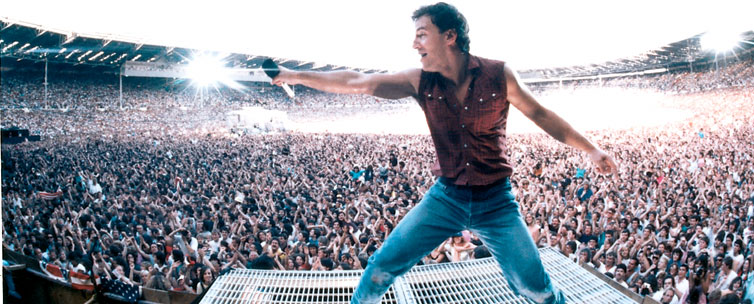
As you may have heard, eMusic inked a contract with Sony to make the label’s back catalog available for download (with a moving wall of two years), including albums by Bruce Springsteen, Modest Mouse and, um, Michael Jackson. I don’t have an MBA from Harvard, and I’m not a self-described ‘Internet (insert buzzword) guru’. But I can’t imagine that any business strategy that starts by alienating your most loyal customers is the way to go, and that’s exactly what eMusic did. Not in the nebulous, ‘the cool kids won’t like it’ way (which they may also have done), but in the real, live ‘hits you in the wallet’ way, as long-term subscribers are losing their grandfathered-in plans at the end of July and getting fewer tracks for the same price; in my own case, dropping from 50 downloads a month to 30. Needless to say, people are unhappy.
So after that fairly shaky start, what’s going to happen? At this point, eMusic is the place to go to easily find obscure indie songs; it’s always my first stop when I hear about a band for the first time. While the pricing structure facilitates this – it’s easy to give new bands a chance – I’ve mostly just been happy that they have ever-increasing amounts of cool stuff (like my most recent find, the Haligonian band Plumtree, who wrote the song that was the inspiration for Scott Pilgrim). But if the idea is to attract a vast new audience by adding Sony’s back catalog, they are differentiating themself not on what they sell, but how much they sell it for; Amazon currently lists over 500 Bruce Springsteen MP3s, for example, which surely includes most of his releases. eMusic only makes economic sense if you are a very consistent downloader. If you are just an occasional purchaser, it makes more sense to just buy MP3s à la carte. This suggests that their shiny new subscriber base would be sensitive to anything that closes the gap between eMusic pricing and ‘regular’ pricing, such as iTunes dropping their prices further. As well, if streaming services continue to improve, casual listeners will have less incentive to download. I guess that’s a risk that eMusic decided was worth taking, and I hope it pays off, especially since they are probably going to start by losing customers.
MP3: Plumtree – Scott Pilgrim [buy]
Desktop version of a digital instrument
June 1, 2009Developer Andre Michelle played with the Yamaha Tenori-On (see video above) at a conference in Frankfurt, and then went home and wrote a gorgeous Flash version called ToneMatrix. It’s beautiful, and addictive, and now I really want it on my iPhone. Check it out yourself here.
Off-topic: Pacific Northwest road trip!
May 29, 2009
I’m going to be on the road for the next few days, exploring the Olympic Peninsula and Vancouver Island. One of my favourite driving songs seems strangely relevant, since the forecast looks perfect.
MP3: Beta Band – Dry The Rain (live) [buy]
(if you’re interested, you can follow me on Twitter or keep an eye on my Flickr page)
Memorial Day
May 25, 2009
Memorial Day. More than just the official start of the American summer.
MP3: The Pogues – The Band Played Waltzing Matilda [buy; more about Eric Bogle]
SanFran MusicTech Summit roundup
May 21, 2009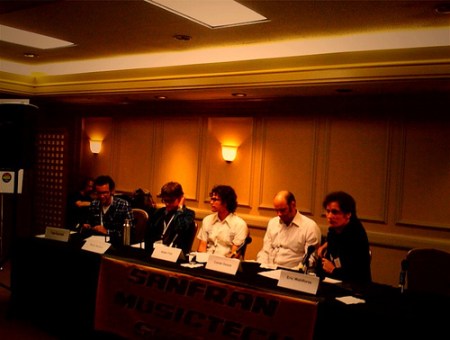
This year’s SanFran MusicTech Summit had a lot going on. Somewhere north of 600 people turned up, including tech/development people, marketers, and business development people, and I’d say about half of the crowd put up a hand when asked if they were a musician (I suspect there’s considerable overlap between that category and the others).
Unfortunately, with three concurrent tracks, it’s easy to miss a lot of the conference. If you’re interested in knowing more about what went on than what’s in this post, here are some other summaries: CNet, NY Times, Washington Post. And if you think Twitter, and not journalism, is the first rough draft of history, you can read what people (including me) said about it in the heat of the moment by searching for #sfmusictech.
Some highlights:
Biggest tease: Paul Lamere of Echo Nest demo’ed their extension to Spotify that uses their musical analysis-based technology to create extended Spotify playlists, based on a seed song, for example. It looked great, and you can read more about it at Paul’s blog. Unfortunately, because of the byzantine licensing arrangements (another theme of the conference), Spotify is not yet available in the US. It’s gonna be the future soon, right?
Second-biggest tease: We wrote about Band Metrics, a music analytics service that aggregates data from across the web, a few months ago. The site was demo’ed at the conference. While it’s still in private beta, conference attendees were given an invite code. Unfortunately, it turned out to be only valid for the day, so my attempt to register after the conference was unsuccessful. Stay tuned for more info about the service in the coming weeks (I hope!).
Biggest app north of the border: I talked to Darryl Ballantyne, of Toronto-based LyricFind, and he mentioned that their free iPhone app is one of the most-downloaded in Canada. The company does all the back-end work to make licensed lyrics available (their engine powers Lyrics.com, for example) and they’ve recently branched out into consumer products. Worth checking out (and I’m not saying that just because they brought kegs of Canadian beer for the reception).
Biggest fight: By far the most, uh, lively panel I went to was the Monetization: Idealism in Practice panel. Jim Griffin talked about Choruss, which is a proposal to charge colleges a flat per-student fee for access to music, in whatever form (torrents, streaming, purchases, whatever). The school would collect data on how students acquired and listened to music, and use that data to disburse the collected funds to artists (by means which were not fully explained). It was worth going to the panel just to see the Electronic Frontier Foundation (in the person of Fred Von Lohmann, one of their senior staff attorneys) on the same side as the major record labels (Choruss was started by Warner and is backed by several other majors). However, this is still a pretty contentious proposal, especially since the colleges are kind of paying protection money (‘you promise not to sue us, right?’), because it’s not clear how the indies or unsigned musicians will be represented, and because it seems incompatible with other business models. I know that many z=z readers are musicians, associated with a college, or both, and I’d be really interested in what you have to say – does the Choruss model make sense to you? Why or why not?
MP3: Jonathan Coulton – The Future Soon [buy/download]
Image: San Francisco Music Tech #4 by Flickr user .schill, reposted here under its Creative Commons license.
Moderat at Neumo’s, and a call for better visuals
May 19, 2009What is it with naked women in the visuals at techno shows? I went to see Dietrich Schoenemann at ReBar a week or so ago, and the images included, yup, women in various stages of undress. This was a persistent peeve for me at Midweek Techno in Cambridge (I haven’t been there in a while, so I don’t know if it’s still heavy on the softcore, although I imagine it is).
Here are three excellent reasons to avoid female nudity in visuals. VJs, please listen up.
It’s boring. Do something more creative! Resorting to porn basically tells the world that you are bereft of good ideas. It must be easier than ever to find interesting videos or (better) to create your own graphics – do it!
It’s distracting. Human beings are hard-wired to look at people. Really. Lots of T and A in your visuals is incredibly distracting from what we are really there for, the music. It’s also difficult to abstract people; no matter how much you visually distort the images, our monkey brains persist in focusing on them.
It’s off-putting. Techno is, at least in the US, a sausagefest. There’s a reason why women frequently get discounted admission. Putting naked women on a screen sends a message to any females that do show up that they are not the target group and that they are somewhere they don’t really belong. And honestly, would you rather have two-dimensional women on the screen, or real women in the crowd?
Tonight (May 19) is the Moderat (Modeselektor + Apparat) show at Neumo’s in Seattle. Based on these great examples, I’m looking forward to the visuals, by Berlin-based Pfadfinderei.
Sorry for the radio silence
May 17, 2009
As you probably know, zed equals zee is a mostly one-woman show, and occasionally life gets in the way. My apologies for the unscheduled hiatus. I’ll be at the the SanFran MusicTech Summit tomorrow, so stay tuned for a report on the events, and for more incoming transmissions later this week.
Image: Parkes_01 by Flickr user swingtan, reposted here under its Creative Commons license.
Lawnapalooza at UW
May 13, 2009
So tomorrow (Thursday, May 14th) is the University of Washington’s annual Lawnapalooza, put on by the student union. There are assorted carnivalesque activities, but the real draw for me is the music—three local bands are performing. The Cave Singers (pictured) headline, and they are being supported by Telekinesis and z=z faves Hey Marseilles. The festivities get going at around 11 am on the Husky Union Building lawn. Unfortunately, it’s not clear if the weather will cooperate (it is Seattle, after all), but if you are on campus or in the area, you should certainly check it out.
Hypetape: new playlist site
May 12, 2009
Hypetape describes itself, somewhat redundantly, as ‘the illegitimate lovechild of The Hype Machine and Muxtape.’ It scrapes the web for MP3s, and lets you put together playlists, which you can save and share. They don’t host any of the music (so they aren’t vulnerable to filesharing charges). It’s a neat idea, with a straightforward interface, but there’s one major problem: music posted to blogs is almost always ephemeral, whether by choice or necessity. That means that the life expectancy of your playlists is shorter than a snowball in a supernova. I did a test search on British Sea Power and I think that the resultant songs were ordered chronologically (“Come Wander With Me” was at the top), but it would be useful to see a posting date, so you’d at least have a sense of when the best-by date would be. What would make this a really compelling application, as far as I’m concerned, is if I could use Hypetape to pull together a mixtape, and then for it to automagically find and download the MP3s, and have them appear as a labeled playlist in iTunes. Ideally, it’d be coupled with a good music exploration or recommendation system, to make it easy to find artists that I didn’t already know about (if anyone is listening, I would also like a pony).
What do you think? What would you want to see in a playlist site?
[image: buy the t-shirt!]
Auto-Tune, pop, and the body politic
May 5, 2009
A bit of pop culture commentary today…
What I Learned at the Pop Conference. From The Stranger, a lighthearted summary of the goings-on at this year’s EMP Pop Conference, which had the theme, “Dance Music Sex Romance: Pop and the Body Politic.” Under the heading, “People Like Gimmicks,” author Eric Grandy describes this talk:
Douglas Wolk, presenting a paper on the incorporeality of club and radio DJs, the disconnect between their bodies and the sound they produce—they can’t physically touch the sound they create the way that a guitarist can touch the vibration of a string, they aren’t physically interacting with their audiences, and if they’re doing their job right they might as well not even have a physical body—stood at the podium, silently shuffling his papers every couple minutes and cueing video clips while prerecorded voices read the paper he’d written. A cute and effective conceptual stunt.
The article is a great overview of the conference that captures both academic music nerdery, silliness and—the best part—the intersection of the two.
Auto-Tune reconsidered. Like most indie music fanatics, I have considerable disdain for Auto-Tune—at its best, it’s a crutch, and at its worst, it’s a way for people (young skinny beautiful people, that is) with no musical talent to become pop stars. That is, until I read this article in Frieze Magazine, “Pitch Perfect”. In particular, Jace Clayton pulls in examples from Cher to Kanye West to North African Berber pop, complete with embedded YouTube videos so you can listen. He argues that effective use of Autotune requires the vocalist to work with the electronics:
Unlike traditional effects such as reverb or echo, Auto-Tune actively responds to human error and pitch subtleties. It doesn’t flatten or smooth. Nor does it universalize. Ari Raskin, chief engineer of high-end Manhattan recording studio Chung King, explains, ‘if you sing really ‘on’ [key] then the effect is less drastic’. The software works hard to make wrong notes right, so correctly-pitched notes sound relatively natural. But a virtuoso will confound the software when sliding around notes. The interplay becomes complex.
and that this melding of the human and the digital is a ‘cyborg embrace.’ Check out the whole article and see if it makes you re-think the use of Auto-Tune, too.
[image credit: Mark Kaufman, The Stranger]
MP3: Matmos – Regicide [buy]
Music and tech news roundup
May 4, 2009
Music and technology news from around the Internet:
Canada is a nation of pirates. Arrr! The US Trade Representatives, who track intellectual property protections among US trading partners, elevated Canada from their ‘watch list’ to the ‘priority watch list’ last week, which puts it alongside China, Russia, and India. They only presented data for software piracy (not music or movies), on which Canada is at the bottom of the list of pirates. I’d guess that Canada got added to the super bad guys list because they didn’t pass a bill that would be Canadian equivalent of the DMCA, much like it got added to the list of countries whose citizens you shouldn’t talk to if you do DARPA or DoD-funded research right after Canadians declined to send troops to Iraq – never mind the larger picture. [via Ars Technica, from whence came the fantastic illustration above]
MGMT settles lawsuit against Sarkozy’s party. Speaking of piracy, MGMT sued French President Nicolas Sarkozy’s political party, the Union for a Popular Movement (UMP), for using their song, “Kids” at rallies and on videos on the UMP website. MGMT weren’t offended by them using to song per se, but more by its unauthorized use by the UMP, who are pushing a new anti-piracy bill, with stricter penalties for downloading and filesharing. MGMT settled with the party, for somewhere in the ballpark of €30K, which they plan to donate to artists’ rights groups. [via CHARTAttack]
Best Buy to start carrying vinyl. Best Buy, which is the third-largest music-seller after iTunes and Wal-Mart, has decided to start carrying vinyl records at all its stores after a 100-store pilot project proved successful. They’re going to carry a pretty small selection at each store – about 200 albums, versus about 8000 CDs – but this is definitely seen as a net win by the music industry. A number of record companies have started re-releasing (or are gearing up to re-release) LPs, complete with original artwork and packaging. While they cost more to produce, and have lower margins than CDs, sales of vinyl are growing – pretty much the only bright spot in the world of physical music. [New York Post]
Home boozing is killing music. The Guardian reports that revenues from public performance of music in UK pubs and clubs fell for the first time ever, by about 2%. This corresponds with a drop in beer volume sales, and has been attributed to more people staying home and drinking, rather than spending money in pubs. Wonder if we’ll see something similar in the US soon. [via Current]
Richie Hawtin tweets track info while DJ’ing. Richie Hawtin has started using a custom version of Traktor Pro mixing software to automatically send out track information to Twitter while he’s onstage (you can take a look here). While this is obviously a boon to the kind of music nerds who want to know every track that’s getting played (er, guilty as charged), it’s a great way for lesser-known labels and songs to be identified, and may eventually lead to a better way for them to be compensated for performance rights. [via The Stranger]
MP3: MGMT – Kids [buy]
It’s May 1st…
May 1, 2009
If you’re anywhere outside the US or Canada, Happy May Day! If not, Happy First of May!
MP3: Billy Bragg – There is Power in a Union [buy]
MP3: Jonathan Coulton – First of May [buy/download] (N even remotely SFW! Also it’s absurdly catchy, so try not to inadvertently sing it aloud)
Music venues with good food
April 30, 2009
A recent article in Gourmet, “Eight Great Rock Venues With Great Food,” combines two of my obsessions, food and live music (three if you count travel) The article is written by Mia Clarke, guitarist of Electrelane (who are now on indefinite hiatus), and is gleaned from her years of touring with the band. Cambridge’s own Middle East made the cut for its fare, as did the Bite Cafe at the Empty Bottle in Chicago. Nothing made the list from Seattle, sadly (although the Triple Door got a shout-out in the comments). While not on Clarke’s list, the reputation of Stubbs Bar-B-Q in Austin has reached the barbecue-deprived north, and I’m looking forward to checking it out this summer (SXSWers, any feedback?). I’d also add Toronto’s Sneaky Dee’s for its Mexican fare; it frequently appears in the Scott Pilgrim graphic novels, and his band, Sex Bob-omb plays there (inevitably, the performance is interrupted by a homicidal robot, which Scott fights off with his bass guitar).
Check out the list, and then tell us what you think it’s missing. Where do you go in your ‘hood for good food and good music?
MP3: Electrelane – To The East [buy]
Upcoming: The ‘Nac Proudly Presents!
April 29, 2009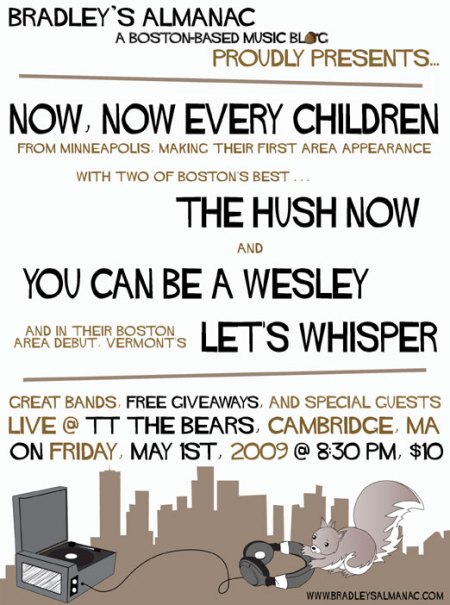
Boston has been blessed with more great shows than usual recently, as this town’s hard-working and -playing music bloggers have been lining up bands to play for our mutual enjoyment. And the big gun is coming out this week – Bradley’s Almanac is hosting a night of bands at TT the Bear’s this Friday, May 1st. Headliners are Minneapolis’ Now, Now Every Children, and they’ll be supported by Boston’s The Hush Now and You Can Be A Wesley, as well as Vermont’s Let’s Whisper. If you haven’t yet, you should go to the ‘Nac and read Brad’s description – it makes me want to get on a plane and fly to Boston for the festivities (admittedly, I already need to buy him a drink and thank him for recording the John Darnielle show). He’s posted MP3s from each of the bands, but I’m using this as an excuse to remind you that The Hush Now‘s entire album is available for free download, so you should check it out before you go.
Upcoming: Condo Fucks play WMBR benefit
April 28, 2009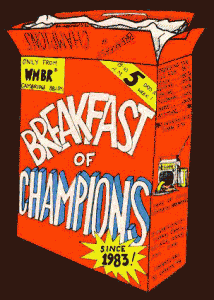
In celebration of Jon Bernhardt’s quarter-century of DJing, he’s convinced the artists that he’s played the most to do a pair of benefit shows. Bernhardt holds down the Friday morning slot at WMBR, one of my three favourite radio stations. Condo Fucks (a permutation of Yo La Tengo, his second-most-played artist), The Bevis Frond (most-played artist), and Sleepyhead play at TT the Bear’s on Sunday, June 21st. Versus and Rebecca Gates (formerly of The Spinanes) play Church on Saturday, June 27th. Full details on the show are here, and tickets are on sale now. All net proceeds benefit WMBR.
MP3: Condo Fucks – This is Where I Belong (Kinks cover) [buy]
Music and tech news roundup
April 27, 2009
Catching up on the miscellany of music and tech happenings around the Interwebs…
‘Pirates’ are the biggest music buyers. A new study out of a business school in Norway suggests that people who downloaded music off P2P services bought ten times more music legally (downloads and CDs) than their non-P2P-using counterparts. This corroborates a 2006 Canadian study that found the same thing. Needless to say, record companies are disputing the findings. [via Ars Technica]
New turntable outputs MP3s directly to USB. Vinyl-lovers, rejoice! Denon’s new DP-200USB turntable (pictured) outputs MP3s directly to a USB thumbdrive, and the included software analyses the first 15 seconds of each song to match against the Gracenote database and automatically get the metadata. [via Cool Hunting]
How to find music on Twitter: If you’re a dedicated Twitter user and music lover, Wired has a terrific roundup of all the different music services that interface with the microblogging service. But I think the single best piece of advice is this, “[O]nce you find a like-minded fan on the network, you can follow their feed.”
Help build better music recommenders by rating playlists! Luke Barrington, a researcher at UCSD, is soliciting the help of people like you to evaluate playlists generating by a variety of means (like artist similarity vs tag similarity). You’re presented with a ‘seed song’ and two short playlists which you can listen to, and then you can decide which one fits the initial song better. It’s fun and you get help scientists out. Take the survey here. [via Music Machinery]
22 000 words of EULA to put an iTunes song on your iPhone. I saw this in a tweet by Cory Doctorow (“Informed consent my ass.”), and did a bit of digging. Jason Schultz is the director of the Samuelson Law, Technology and Public Policy Clinic at UC Berkeley, and was at the Federal Trade Commission’s conference on DRM in Seattle last week. A deputy director of the FTC warned the industry that they need to stop hiding restrictions in the unreadable fine print of end-user licensing agreements.
Watch: Matt and Kim, “Lessons Learned”
April 23, 2009Okay, this is a terrific video – funny and compelling, and it goes perfectly with the song. NSFW if pixelated nudity is problematic.
Live music apps for the iPhone
April 13, 2009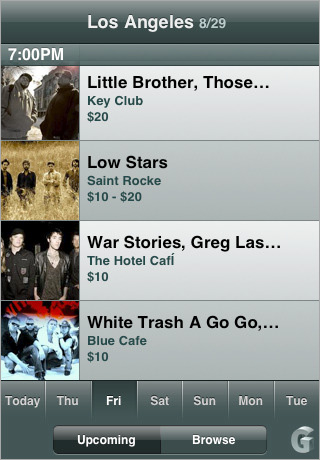

I’m a big fan of live music, but I also understand that there is a bit of a barrier. Unlike going to your favourite bar, live music is an ever-changing landscape. Two new iPhone apps for live music are working to make it easier.
Gigotron, which won an award for best mobile app at SXSW Interactive, was originally only available for New York, LA, and San Francisco, but recently rolled out an update that includes Seattle. To be precise, it includes ‘Seattle-Tacoma,’ which I wouldn’t exactly consider one city. The listings are presented as a time-ordered list (based on doors, I presume). The information about the bands is pretty good, but not exhaustive, obviously; a quick check of Saturday night shows resulted in descriptions for The Gaslight Anthem, the Heartless Bastards, and local band The Whore Moans, but not for fellow locals Peter Parker. But the venue information is minimal, at best. Not only does it fail to specify city or neighborhood within Gigatron, but the ‘map this venue’ button seems to only send street address (not city) information to Google Maps, which means I ended up with locations in Skagit and Vancouver. Not good.
Bandloop takes the opposite tack. Rather than focusing on artists, it focuses on your location, using the GPS info in the 3G iPhone to find you. Event information is presented as a map, and you can drill down for venue and artist information. The info page for each event includes the address of the venue, together with its website and the website of the artist. At the moment, it doeen’t seem to include Myspace pages, which means its easier to get information on more established bands. But I’m not really thrilled with having to go to artist websites to get any idea about their music, especially not on my phone.
I much prefer Bandloop’s location-based interface, but would love it if it included in-line capsule descriptions like Gigotron. Both of these apps are solid betas, but I don’t think I’d want to rely on either of them to make my Saturday night plans.
Tiered pricing at iTunes
April 8, 2009
As of yesterday, iTunes switched to their new model of tiered pricing – $1.29 for in-demand songs, $0.99 for ‘regular’ songs, and $0.69 for the back catalog (and no DRM). This is hardly a new approach – Beatport, the dominant source of electronic and dance music, uses the same type of variable pricing.
On the surface, this is a pretty rational move, straight supply-and-demand. But the economics of Internet distribution are pretty transparent – the incremental cost of selling the new Britney Spears single is the same as the obscure rarity, and it’s pretty close to nil in both cases. The real pull that Apple has is in the close integration of iTunes with iPhones and iPods, and it’s likely that they are counting on their dominance in the device market to continue to drive sales of MP3s, even at the higher price point. Consumers are paying for this convenience, not anything else.
But with the rise of streaming services, especially to mobile devices, it’s not clear whether sales of MP3s will be the dominant paradigm in a few years. Long tail notwithstanding, hit singles still constitute the bulk of music sales revenue, this might just be a way for Apple to make hay while the sun shines.
—
Incidentally, Owen Ashworth (of Casiotone for the Painfully Alone) has an interesting idea that makes use of the long-tail and the zero incremental cost – he suggests that iTunes should curate genre-oriented playlists of 100-200 songs and sell them for $5-$10. The per-song cost is low, it’ll expose listeners to new artists, and it competes directly with the playlist approach of the streaming services. More here.


 zed equals zee